الأربعاء، 29 ديسمبر 2010

Bleeeezard!

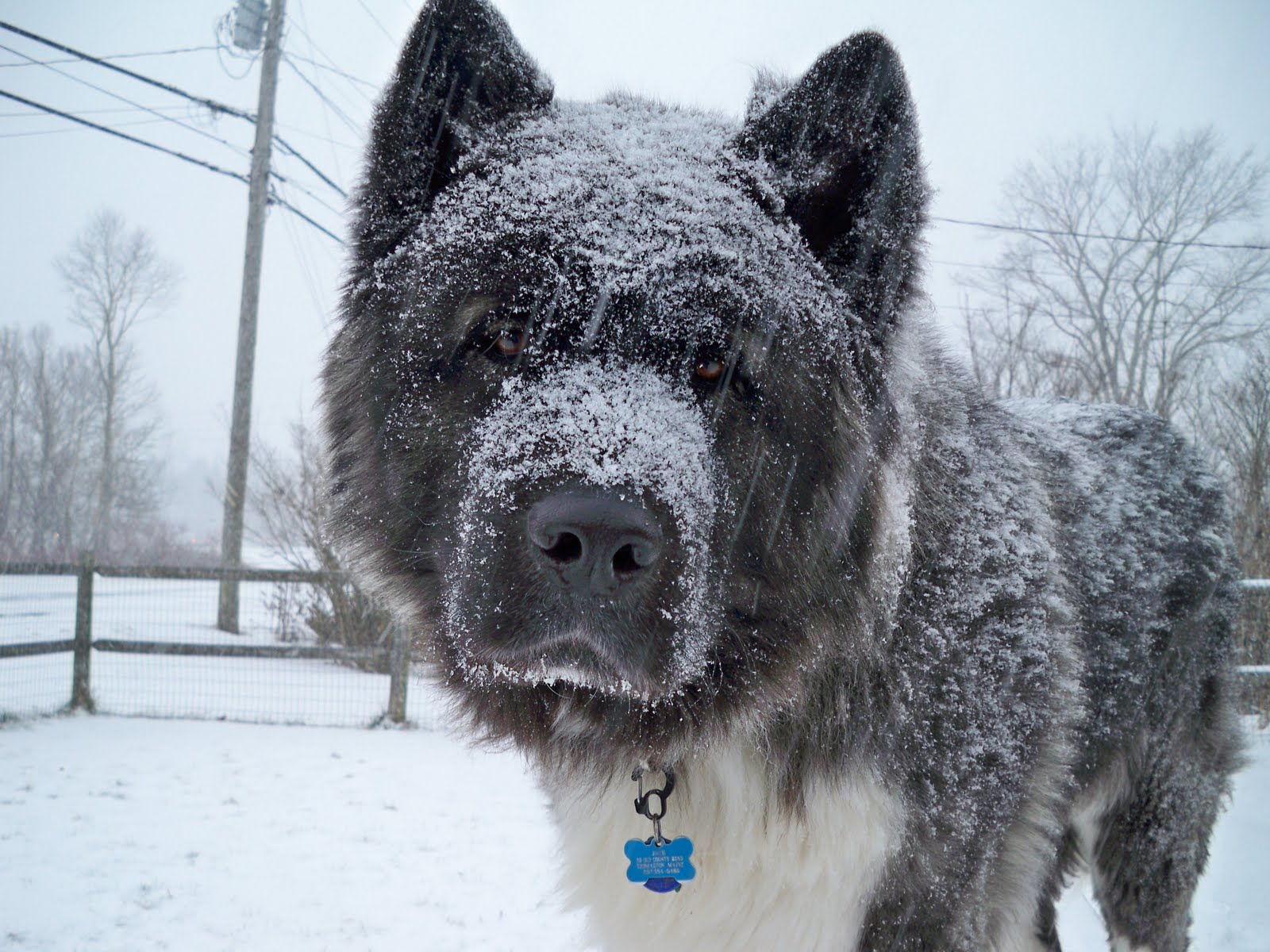
It's snowy - yucky, rainy, cold...stay inside, keep pooch snuggled on the bed, right? No! Get out there in the elements! (Yes, that's my pooch Monkey the greyhound in the lower right-hand corner dwarfed by that mound of snow.)

Park Slope, Brooklyn
Most importantly, pooch needs it. A little rain, snow, or cold weather doesn't stop you from needing to go to the gym, does it? (Though you might wish it did.) Neither did it stop wolves from needing to track and hunt 30,000 years ago (in fact inclimate weather historically increased calorie loss and hence need to find sustenance); and it doesn't stop them from needing the exercise, stimulation, and physical and mental release nowadays in the big city any more than it did back then.

Aren't our little babies cold, though? That's what coats are for! But remember, your pooch is already wearing a full-length leather coat, and on top of that a fur coat! Different breeds, of course, need different levels of protection from the elements: my greyhounds, for instance, are among the worst-dressed winter dogs, with their short hair, paper-thin skin, and not an ounce of fat to burn. So we bundle up most times when we wander. But dogs don't feel cold in the way we humans do, so don't worry if you're just running out for a bit and can't find her coat; again, she's already wearing a very nice one.


In fact, the main reason I use coats is to temper and control the dogs' energy. I've found that they tend to get hyper, spinning and running around, when they feel the cold (excitement and joy, yes, but probably also a natural reaction to try and keep the body temperature up). I make sure to give them exercise - on long hikes, and running and playing at the dog park - but keeping them calm at other times is first of all a safety issue when they're offleash (they're not going to tear off into the streeet), and also keeps interactions with other dogs and humans on a nice, calm, peaceful note. Calm energy, happy submission and obedience, rewarded by play and socialization - that's the formula!

What about their little tender paws, in the snow, ice, and salt? Most can handle it just fine, for short periods of time: just like his leather coat, your dog is already wearing leather boots. But care is required: clean off ice-balls regularly, and when you get back home. Salt is very bad for paws but not as big a deal as some owners make it out to be. I don't find booties necessary for my dogs, though they may be for some; all I do is when I see them limping from having stepped on a rocks of salt that sticks to their pads, I lift their paw up and wipe it. They're good to go immediately! What you want to look out for is leaving salt for more than a couple minutes on the pad; it can actually eat away the pad and skin and cause a wound that can lead to infection. But you don't have to worry about this happening in just a block or two. Again, clean with a wet towel and dry off after you get home.

Leash 'em up, and let it snow!

الثلاثاء، 28 ديسمبر 2010

How to get your dogs attention

Here is a long overdue training post on what I consider the beginning of focus work.

Getting your dogs attention is the first step in building your foundation to having a really reliable recall and for focus work later if needed. To accomplish this the first thing I do is teach the dog that its' name is valuable. When I say the dogs name "Fido" and they look at me I praise them verbally. "Good dog!" A happy tone of voice is important for verbal praise. Otherwise it has no meaning to the dog. If the dog comes over to me I will also add physical praise like petting and stroking if they like it. Note: not all dogs like to be handled, some are touch sensitive. Skip petting for a touch sensitive dog. Do not pet your dog on the top of it's head. Most dogs dislike this form of petting. (Watch your dog closely when you do this, do they pull away or duck? If so they are trying to avoid it.) I will also have a happy facial expression whenever I praise a dog. Remember body language is our dogs first language so they learn to read our body and facial expressions very quickly. If they come over I might also add play and/or a food reward. Our goal is to build a positive association to their name and our contact with them.
*
A review about using praise ~ The 5 most commons ways we can praise our dogs are:
1) verbally - in a happy tone
2) physically - if they like being touched
3) by smiling - communication in language they understand
4) engaging in play - fetch, tug, games they enjoy
and
5) using food rewards - high value treats
*
Because we can't call a dog to us unless they are paying attention we need to teach the attention first. We cannot guarantee we have that attention unless they are physically looking at us. Even then remember that we are competing with things we don't smell or hear so we may not have 100% of their attention, especially if we are outside. If they are sniffing something or looking at something else they are not trying to ignore you. Most times they are just focused on what has their attention and they don't hear us. Saying the dogs name and rewarding them for looking at us is the start of building great focus.
*
The next step is teaching the dog what the word "come" actually means to us. Now because I want "come" to always mean come to me and sit I teach it that way. If you want the dog to just come closer use a different word. Example: I use "let's go" to mean come along with me. One of the most important things to remember when using the word/cue "come" is to never use it for anything the dog considers a negative reason. For instance if they hate getting a bath and you call them to you and then stick them in the tub you will poison that cue. They will pause the next time you call them because you've used it with a negative association to them. For this reason I also use a completely different word for let's go back into the house or playtime is over. (sidenote tip: to get dogs to want to come back into the house or car toss some well loved treats and/or a favorite toy on the floor as you go out so as soon as the dog walks back into the house or car they get magically rewarded.)
*
You can teach your recall in a few ways, this is just one of them. I tend to begin with lure reward training especially if the dog hasn't learned his name means anything. Put the treat in front of the dogs nose and back away from them a few steps pulling the treat in front of your legs so they target their nose on it. AS they are coming towards you say the cue word "come". The reason you say the word as they are doing it is to pair the word with the action for the dog. Don't repeat your cue. When the dog gets to the treat simply raise it slightly back over the dogs head so they sit. You can also say the word sit AS they are sitting. Say "yes", your verbal marker (or click) and give the treat after they sit. My hand action pulling the treat towards me, and pulling the treat up, also become hand signals later for the commands. (Lure reward training is also excellent to use with deaf dogs. Use a thumbs up signal for your reward marker signal.)
*
If you teach your dog its' name has meaning you will notice the dog starts coming to you before you say the actual cue word "come". It can become it's own pre-recall command so make sure you separate the name from the come command with a few seconds. Otherwise "Fido come" becomes the command which isn't the goal because then when you say the word "come" alone they may not understand what you want. "Fido" should mean look at me so you can pair it with other things later, not just for the recall. Whenever my dogs come to me I always reward them in some way. EVERY time. This keeps the recall worthwhile to them. Remember that dogs are very much "What's in it for me" creatures. Rewarding them also establishes that coming to me gets them good things and therefore makes the recall a positive association. Most people have problems getting a dog to come when called because they try calling them when the dog is engaged in a more fun behavior. If we make the recall more fun than everything else that problem will resolve.
*
Now I know some clicker trainers prefer to get the dog doing a behavior reliably before they name it for the dog. This is also ok as long as everyone understands what they need to do to make that work. I find some people have a hard time not speaking to their dogs so I think this way accommodates that issue. There are some things I also teach before naming and putting on a cue, this just isn't one of them. (for me)
*
Trouble shooting: If your dog doesn't look at you when you say its name add sound. Clap your hands or make kissing noises. Say the name happily when they do finally look. Shake a toy when they look. Make them want to come to you. Whatever you do do NOT get annoyed and yell at them. Remember we are making positive associations. Practice inside first where there are fewer distractions. When moving your recall practice outside the house start out closer to the dog to be sure you can get their attention. Increase your distance over time. Do NOT say come until the dog is looking at you and on its way towards you. Make sure you remember to have them sit when they get to you. Don't repeat your cue "come" but you can make other noises to encourage forward movement. Keep practice sessions short so they stay fun.
*
Happy training!
Marie Finnegan

الأحد، 26 ديسمبر 2010

Happy Holidays!!

I hope everyone has a wonderful holiday whichever one you celebrate.

And batten down the hatches for all those on the east coast. They say a storms a comin!

الأربعاء، 22 ديسمبر 2010

How To Pick A Trainer

I am currently writing a few "Ask The Trainer" articles for New York Tails Magazine, one of which answers the question:

"There are so many trainers out there, I am overwhelmed with choices. Can you give me some tips on things I should look for in a trainer?"

It's a common and hugely important question, so I thought I'd post my response here. Without further ado, then...


Not only are there a million trainers out there, there are also a million-and-one different training beliefs, training styles, and training methods. Furthermore, in addition to being an under-funded, under-reasearched, and overly-contested field, dog training is constantly developing and changing, so often there is more than one right way to skin the...er, dog.  Here, though, is my list of the top four criteria to take into consideration when looking for an excellent, effective, positive trainer.

1. Education. I don't mean the trainer has to have a Ph.D., or to have a zillion different unintelligible letters after his name. Often, in fact, great learners aren't the best teachers; and there is a vast gap between studying and real-world application. However, first of all from a purely practical and factual standpoint, there are lots of medical, biological, and psychological facts that a good dog trainer should know - whether he gets them from traditional university courses, from studying under established trainers, from previous work in related fields, or someplace else. 
Ultimately, I am dubious about the investment, enthusiasm, and commitment of a trainer who hasn't studied dog behavior to some significant extent. After all, I got into dog training for the same reason I started studying it - because I love dogs, and I can't get enough of them or learn enough about them!   

2. Experience. Study all you want, have as much innate dog-sense as you want; still there's no match for experience, for having seen as many different dogs as possible in as many different situations as possible. This doesn't necessarily mean choose the trainer who has been in business for the longest. Many trainers only teach restricted types of obedience classes, or haven't tried a new method in ten years; while one who just started her own business may have worked for years in a veterinary office, doggie-daycare, grooming salon, or simply grown up around dogs while her parents ran a breeding business or pet store. 
Although specialized knowledge is sometimes a plus - e.g. with a veterinary behaviorist or a breed specialist - often a wide range of experience translates into better ability to adapt to your specific situation and provide for you what you need. Every case is unique in a million ways, making training closer to an art form than a science (given the basic education as an equal starting starting point). And the more paints a trainer has, the more likely it is that he'll be able to patch up your particular canvas.

3. Openness. By this I mean a number of things, starting from your first interaction and continuing far after your training sessions are over. First of all, a website, brochure, or affiliate business should be able to tell you lots about the trainer - like his or her philosophy, methods, education, experience, and so on. When you then contact the trainer, he should be responsive by phone, email, or in conversation, willing to answer all of the questions you should rightfully ask. Before and during the training, then, the trainer should be as clear about the methods, theory, and technique of what he is doing as you want him to  be (and probably even moreso, since I believe that educating the owners is generally far more effective than having a third party train their dog). 
If you ever feel dubious or uncomfortable about something the trainer suggests or is doing, furthermore, you should feel welcome to express your concerns and you deserve a full explanation if not a recommendation of alternative methods. And finally, a trainer who genuinely cares about every dog he works with should be available for followup questions or updates by email or phone for months, or even years, after your training is finished. Dog training is not a magic bullet and cannot happen in an instant, and a trainer who is honest will tell you this and should have a plan in place to provide you continuous help over the long-term.

4. A holistic approach. By this I mean that the trainer approaches your situation and his solutions from a number of simultaneous angles. Beware any trainer who first of all doesn't look at the whole picture - e.g. by asking you questions about your dog's history, your own history with dogs, the specifics of your dog's particular problems, incidents, any methods you've tried, how they've worked or how they haven't, and so on. Also the trainer should be testing your dog's temperament and behavior in a variety of ways himself, not just taking your word on the issue (after all, he's supposed to be the expert and should often see behavior signs that non-experts aren't trained to notice). 
In the same vein, beware any trainer who blindly follows a single, simple method for treating your problem, not to mention one who follows that same method for every problem. Be suspicious of anyone who goes immediately for a technological product - e.g. Bitter Apple, a Gentle Leader, a citronella collar, or especially something controversial like a shock collar. All of these tools have their place, and can help many cases if used properly; but only as part of an overall training or behavior therapy plan that also must contain many other elements. First of all, no artificial product - no "thing" - will by itself train a dog to be a good, calm, obedient, happy family member. Dog training is a branch of psychology, and results come from understanding, empathy, intelligence, and emotional control, not from any battery-powered device or bottled product. Second of all, no problem arises or exists in a vacuum: so in order to combat any particular problem, you must work on all areas of the dog's life at once. If your dog is a bad leash-walker, he'll probably benefit from a stricter feeding ritual; if he has separation anxiety he'll probably benefit from off-leash socialization; if he has leash-aggression he'll probably benefit from obedience class; and so on. A good trainer should show you how to have an entire healthy and balanced relationship between you and your dog.
________________________
There are the four top criteria I recommend keeping in mind when searching for a good dog trainer. I want to finish by explaining an important difference between obedience training and behavior therapy (aka rehabilitation, manners training). Obedience training means teaching your dog to listen to commands - like "Sit", "Come", "Drop it", and "Stay". Behavior therapy means easing your dog's psychologically- or emotionally-based behavior problems - like aggression, anxiety, or hyperactivity. Often, being a good trainer in the one area doesn't necessarily translate to being a good trainer in the other area, so know which one you want to be working on. Often, in my experience, people think they're looking for obedience training when in fact what they need is a good behavior therapist, someone who rehabilitates dogs with problem pasts and makes them well-balanced, social, and happy. Although obedient dogs are often better-balanced than disobedient dogs, it is still entirely possible to have an "obedient" dog - i.e. one who graduates the obedience class with flying colors - and yet who is all over the place with his behavior when not presently being told to sit or give paw.


I suppose I should have also included "Likability" in the list, since first of all dogs know and immediately sense a person's true nature - and second of all you yourself are going to be spending a fair amount of time interacting with the person you choose. But we all know already that we should let our dogs pick who we hang out with, right? :)

الثلاثاء، 14 ديسمبر 2010

Ugly Or Cute?

What is it about bulldogs? I can always count on them to make me laugh. But I'm not laughing at them, I swear - I'm laughing with them! Or at least, I have to be laughing with whomever or whatever humorous force created them.

Here are a few bulldogs I've worked with recently:

May-Elizabeth
(The fancy queen!)
May-Elizabeth is a super-sweetie, will lick your face off but is nervous at first and often avoids big groups of dogs. When you approach her because you just want to squeeze her up into a little butterball, she starts wiggling and scriggling in anticipation - without moving any closer to you - while you're still at least 20 feet away.
Beula
(Old girl!)
Beula has two metal spikes, one in each back leg! Basically her back knees are fused straight by operations, so she has some trouble getting around. That doesn't stop her charging at the hose though! She snorts and snuffles in her old age, bulldog-willing to get that hose, no matter how exhausted she is! Yeah, her tongue is kinda stuck that way. 

Gilda
(Ridiculous, right?)
Gilda is a recent graduate from Calm Energy Obedience Class out of Cheeky Dog Daycare in Dumbo, Brooklyn. She's still a pup and has that mixture of bulldog-exhaustion with puppy energy. She wins for most squishy face I've ever seen or felt, to date.
Gilda again (why not?)
Bulldogs are some of the most loyal, loving, and hilarious dogs on the planet. But the colloquial meaning of "bulldog"- as in "My boss is a bulldog; he just won't take no for an answer!" - doesn't come from nowhere! They were originally bred for jaws that could latch on to an intimidating predator - such as a bull - and just not ease up, never letting go. In my experience, bulldogs are just as stubborn in other areas of life, with other dogs as well as with their owners, and they need firm, calm, consistent leadership with rules and boundaries regularly enforced or their willfulness will simply take over your life.

I first got to know the nature of bulldogs in the doggie daycare where I once worked. There were several gates that the dog-handlers would have to open and close to let various dogs in and out of various spaces, according to their size, temperament, and which were being picked up or dropped off; and it was always a bit of a circus-act trying to get the desired dog or two out of the pack of twenty or thirty through the gates without letting any of the others through (and wherever you are, and whatever gate you happen to be opening, be sure the dogs think it's the greatest place in the world to be and the most desirable gate to go through ever opened). But the bulldogs were particularly tricky. I remember the first time I opened the gate and three of the bulldogs were sitting too close, blocking the entry, so I pushed one of them back with my knee - Cosmo was his name. Not a smart move! Though Cosmo had been sitting peacefully just watching moments before, along with the others, that message to "back up" was all Cosmo needed to decide that forward was undoubtedly the direction he wanted to go! He shoved and garumphed, and made the whole process much more difficult; especially since the other dogs of course decided Cosmo must know something they didn't, and that there must be something really delicious and desirable on the other side of the gate and they had to try to get it before Cosmo did.

That's my experience with bulldogs, as cliche'd as it is:  you tell them what to do, and that makes them suddenly want to do the exact opposite. And when you try to get them to STOP doing what they then have made up their mind to do...best of luck!

A little bit like teenagers, perhaps? (Only cuter?)

الاثنين، 13 ديسمبر 2010

An itchy dog update


Sorry for the lack of posts lately. I've been under the weather but still as busy as ever. To get a bit of a break the one thing I try to do when over committed is to keep the online stuff to a minimum.
*
Jenny's skin is looking a bit better at the moment. (The photo above hides her patchiness.) She just finished some antibiotics for a secondary infection though. I've noticed she seems to be changing color in places now too. Where she used to be all pink parts of her are now turning grey. She is also on a new medication that is supposed to help with the itching. (Cyclosporine which is the generic version of Atopica) I've gotten her off the steriods but am not 100% satisfied with the new meds. If she is still itchy and I need to break out the benedryl what is the point of the Cyclosporine? We are supposed to be at the point of weaning to a smaller dose of it bi-weekly but she is still to itchy. Gahh!
*
I just picked up some different anti itch shampoo to also try to see if it helps. If I don't see a difference soon I have another medication to try that was recommended by another pug person with similar issues. (Thank you Terry!) Jenny's doctors wanted to try the Atopica first.
*
I tried to do what I could using natural remedies and even went to a full raw diet for her for quite awhile. Unfortunately her triggers seem to be more environmental than food related and without a noticeable pattern. I gave up on the raw more because I just couldn't sustain it properly with my schedule a.k.a. life. I worry about getting is just right and put a lot of work into the prep. Using a commercial raw diet would be great except they all contain liver which is one of the few food things she tested as allergic to. Once I feel 100% again I might try some honest kitchen dehydrated with the raw venison.
*
I haven't blogged about it much because I worry about people judging me. I know I shouldn't care about it but I do. Yes I believe in raw diets and yes I believe in (some) natural remedies and I know how not using them looks. I just want my dog to be comfortable. I believe I need to do what I can to provide relief so her quality of life is good. Constant itching is torturous! I am conflicted about everything lately. I am trying to do what is best for her while keeping in mind the long term effects of the treatments I choose as well. No matter what I do there is something to feel guilty about. The most aggravating part? Her itching spells come and go. So there are times no matter what she is on that she itches herself raw and other times she is almost off everything and she is fine. Or she isn't itchy at all but her coat gets all patchy looking. The flare ups are unpredictable and drive me (us!) insane.
*
If living in a bubble was a possibility for a dog I might consider it. ~sigh~
*
(And yes we have done multiple skin scrapings. The next step might need to be a skin biopsy.)

Fun with the microscope ~ Heebee jeebee alert!

Turns out you can take pics with a digital camera through a microscope lens. Check out the dog louse. This creepy crawlie came in on a new families puppy recently.
The yellowish dot on the slide below is what it looks like actual size. They are slightly larger than a flea.
This is scabies, also known as sarcoptic mange mites. Not visible with the naked eye.

And urine crystals. With some bacteria and red blood cells thrown in for fun.
I also get to look at fecal samples but haven't taken a photo of that yet. I'm sure there will be some interesting parasites to show eventually.